No Yard, No Foundation, No Regrets: Inside America's Floating Home Boom
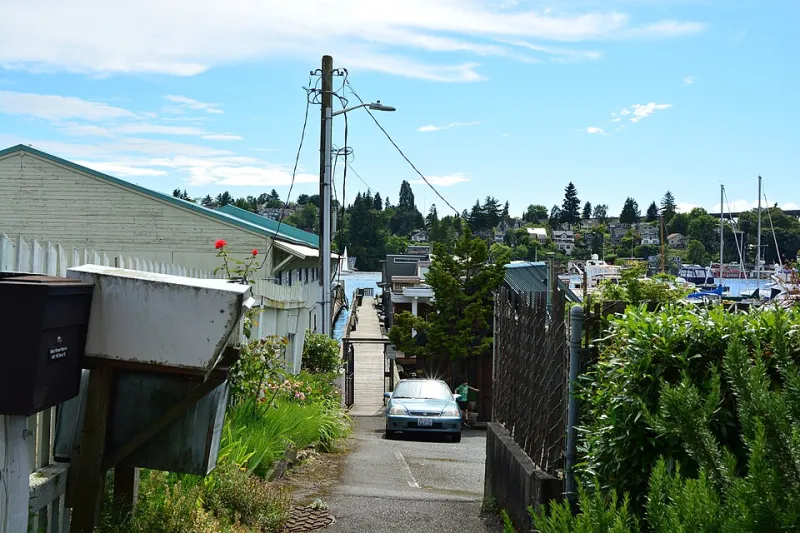
Photo: Joe Mabel, CC BY-SA 4.0, via Wikimedia Commons
There's a moment, almost every floating homeowner will tell you, when the doubt disappears. It's the first morning you wake up to water lapping a few feet below your bedroom window, coffee in hand, watching a heron pick its way along your neighbor's deck. The house doesn't have a yard. It doesn't have a foundation, either. And for a growing number of American buyers, that's precisely the point.
Floating homes and houseboats have long been a quirky footnote in coastal real estate — the stuff of Seattle postcards and Key West house tours. But rising waterfront prices, remote work, and a national appetite for downsizing have pushed this niche into the mainstream. In hot markets like Seattle's Lake Union, well-maintained floating homes now compete with (and often outprice) modest land-based houses in the same zip code.
So what does it actually take to buy one? Let's wade in.
First, Know What You're Actually Buying
The single biggest mistake first-time buyers make is lumping all water-based living into one category. There are real differences that affect everything from your mortgage to your taxes.
True floating homes are permanent structures that float on a hull or pontoon system. They're hooked up to utilities, they don't have engines, and — in some states — they're assessed as real property. Seattle's famous Lake Union community is the gold standard here: these are legally homes, taxed as homes, and financed (with some effort) like homes.
Houseboats are vessels. They may be luxurious, multi-story, and permanently docked, but they have hulls, registrations, and in many cases the ability to move. You'll finance one more like a boat than a house, which brings us to the tricky part.
Liveaboards are people who live aboard ordinary boats — sailboats, trawlers, motor yachts. It's the most affordable entry point and the most lifestyle-intensive.
The Marina Lease Is the Deal
Here's the quirk that surprises most buyers: in most floating home communities, you don't own the water beneath you. You own the home; you lease the slip from a marina. That marina lease becomes a critical piece of your purchase — arguably as important as the house itself.
Before you fall in love with a listing, dig into:
- Lease length and transferability. Can the lease be assigned to a buyer, or does the marina have first right of refusal?
- Monthly fees. Slip rent, utilities, and dues can range from a few hundred dollars to well over a thousand monthly — sometimes rivaling a land mortgage payment.
- Rules on renting and resale. Some marinas cap how many units can be rented, which affects your exit strategy.
- The marina's own stability. If the marina is sold or redeveloped, your home's location — and value — is suddenly in someone else's hands.
In Florida, many houseboat communities operate on similar arrangements, and savvy buyers negotiate the marina agreement before closing, not after.
Financing: Where It Gets Creative
You won't walk into most big banks and get a standard 30-year mortgage on a floating home. Traditional lenders want land as collateral, and you don't have any.
Your realistic options include:
- Specialized marine lenders who underwrite houseboats as vessels, usually at higher rates and shorter terms (10–20 years).
- Local credit unions and portfolio lenders in established floating home markets — Seattle, Portland, and parts of the Pacific Northwest have lenders who know this product well.
- Seller financing, which is more common in this market than almost anywhere else in real estate.
Expect larger down payments — often 20 to 30 percent — and budget for a marine survey in addition to a standard inspection.
What Owners Wish They'd Known
Ask around any floating community and the same themes surface.
Maintenance is a water sport. Hulls need periodic haul-outs and inspection. Moisture management is constant. One Lake Union owner we spoke with put it plainly: "You trade lawn care for bilge care."
Insurance requires homework. Not all insurers write floating structures, and flood coverage works differently when your home is, well, in the flood zone by definition.
Community is closer than close. Dock neighbors share gangways, weather, and occasionally plumbing. Most owners call this the best part. A few call it the hardest.
Winterizing and storm prep are real skills. In northern harbors, ice can damage hulls. In hurricane-prone states, you'll want a documented plan for securing or relocating your home.
Is It Right for You?
Floating living rewards flexibility and punishes it in people who expect a conventional house that happens to bob. If you want turnkey, low-maintenance, guaranteed-appreciation real estate, buy on land. But if the idea of your own front-row harbor seat — sunsets over the water, kayaks off the deck, a community of people who chose the same odd, wonderful path — sounds like home, the numbers may be more workable than you think.
In several harbor markets, a well-located floating home still costs less than a fixer-upper on the shore. The trade is square footage and certainty for a lifestyle you can't replicate anywhere else.
The foundation-free life isn't for everyone. But for a growing crew of Americans, the harbor isn't the view. It's the address.