Built to Host: How Harbor Homes Turn Every Weekend Into the Main Event
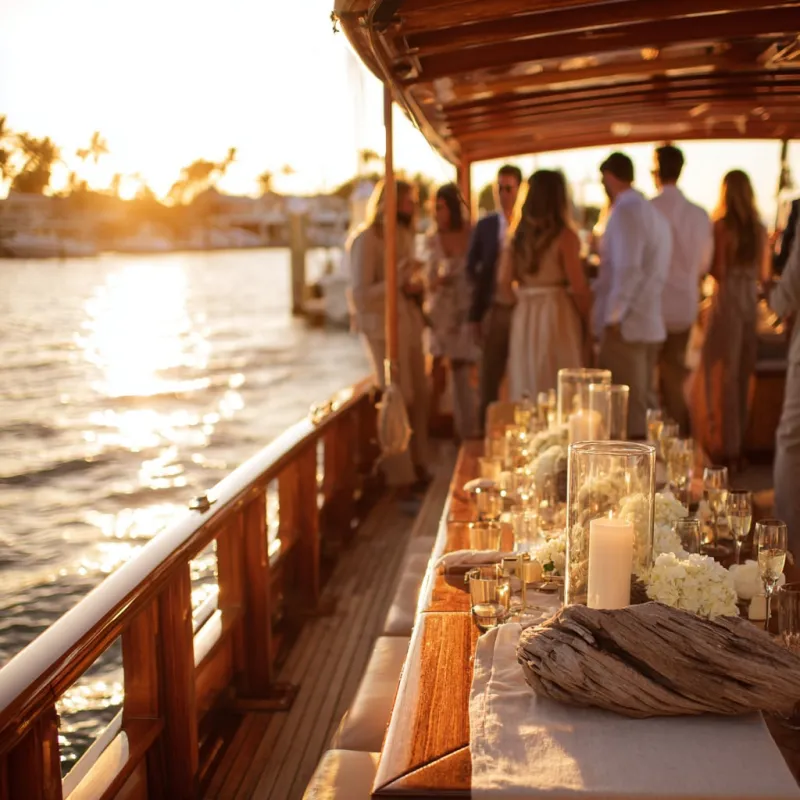
Photo: dockside party sunset friends gathering waterfront deck, via www.womangettingmarried.com
Ask any real estate agent what sells a waterfront home and you'll hear the usual lineup: square footage, dock access, flood elevation. What rarely comes up in the listing remarks — but comes up constantly at open houses — is a question buyers ask almost sheepishly: Could this place host a party?
The answer, more often than buyers expect, is yes. And in harbor towns from Annapolis to Boothbay Harbor, it's quietly becoming the amenity that closes deals.
The Guest List Effect
There's a reason the neighbor with the pool became the neighborhood hub growing up. Water works the same way, only better. A house on the harbor doesn't just give you a place to live — it gives you a destination. Friends who need a solid excuse to drive forty-five minutes for a backyard barbecue will hop in the car on a moment's notice for a dockside happy hour.
This has a compounding effect. The homeowner who hosts becomes the social anchor of the street, which makes the neighborhood stickier, which makes it more desirable, which supports property values. It's the kind of intangible that never shows up on a comparable sales report but shows up constantly in how fast homes in a given enclave go under contract.
What Makes a House 'The One'
Not every waterfront property entertains equally. Walk enough harbor homes and a pattern emerges. The houses that become legendary gathering spots tend to share a handful of traits:
A kitchen that faces the water. It sounds cosmetic until you've cooked for twelve while everyone else is on the deck. An open sightline from the range to the harbor means the cook never gets exiled from the party.
Indoor-outdoor flow. Wide sliders, a covered porch that reads as a second living room, and a deck deep enough for both a dining table and a lounge cluster. In coastal markets, covered outdoor square footage often earns its keep year-round.
A dock worth lingering on. Not every dock is a party dock. The good ones have room for chairs, a spot for a cooler, maybe a fish-cleaning station that doubles as a raw-bar counter. If the dock is purely functional — get on the boat, get off the boat — guests won't stay.
Parking. The unsexy dealbreaker. Waterfront lots are often tight, and nothing kills a harbor gathering faster than a street that fits four cars. Homes with even a modest parking pad hold a real advantage for anyone who entertains.
A guest setup. Bunk rooms, an in-law suite, a finished loft — anything that lets the friends from two states over stay for the weekend instead of leaving after dinner.
The Clambake Economy
Spend a summer weekend in a harbor town and you'll notice the local economy bends toward hosting. Lobster and crab suppliers sell by the case to homeowners, not just restaurants. Kayak and paddleboard rentals run on weekend group bookings. Caterers in coastal markets have quietly built entire businesses around waterfront private events — oyster roasts, low-country boils, sunset raw bars.
A harbor home plugs directly into all of it. Your Saturday isn't a party you cater from the ground up; it's a supply run to the marina market, a call to the kayak outfitter, and a sunset that does the decorating for you. For buyers coming from landlocked suburbs where hosting means a Costco run and a patio string-light budget, the infrastructure alone is a revelation.
Staging for the Host Crowd
If you're selling, this is where the smart money plays. Traditional staging shows buyers where the sofa goes. Hosting-focused staging shows buyers who they'll become.
Set the deck as if guests arrive in twenty minutes: string lights plugged in, a drink station on the porch, the dock with two Adirondack chairs angled toward the sunset. In the kitchen, clear the counters but leave the beverage fridge stocked-looking. If you have a firepit or an outdoor shower, make them obvious — those are the details that trigger the I could live like this moment.
And in the listing itself, write to the lifestyle. "Entertainer's waterfront" outperforms "updated 3/2 with dock" not because it's more accurate, but because it's more specific about the life being sold.
The Amenity You Can't Retrofit
You can add a guest room. You can widen a deck. What you can't add is the harbor itself — the paddle at golden hour, the spontaneous raft-up, the friends who start asking in March what weekends they can come down. That's the amenity, and it transfers with the deed.
Buyers who get this tend to stop shopping by spreadsheet and start shopping by guest list. Sellers who get it stage accordingly — and often sell faster than the comps suggest they should.
The water was always the draw. The entertaining is why people never want to leave.