Chasing the 5 A.M. Glow: Why Sunrise People Think You're Buying the Wrong View
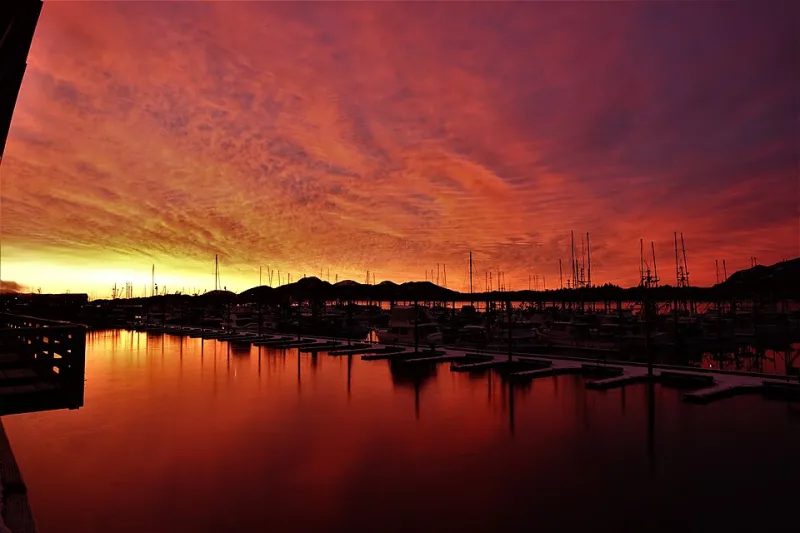
Photo: Forest Service Alaska Region, USDA, Public domain, via Wikimedia Commons
Ask anyone shopping for coastal real estate to describe their dream view and you'll almost always get the same answer: a sunset melting over the water, drink in hand, golden hour stretching into blue. It's the image on every listing brochure from Maine to Monterey.
But spend a few mornings in a working harbor town and you'll notice something the brochures leave out. The people who actually live on the water year-round — the ones who've owned their houses for twenty years — tend to face the other way.
The Hour Nobody Puts on a Brochure
"Sunsets are for visitors," is how Marlene Okafor puts it, and she's lived on the harbor side of Gloucester for eleven years. "Sunrise is when the town belongs to us."
She's describing what harbor regulars call the halcyon hours — that stretch between first light and 7 a.m. when the water goes glassy, mist hangs between the masts, and the first lobster boats rumble out past the breakwater. The light at that hour is different from anything a beach sunset offers: low, silver, and moving. It comes up behind the fishing fleet instead of behind your neighbor's roofline.
There's a practical reason for the devotion, too. Harbors are typically sheltered — that's the whole point of them — so the water at dawn is often mirror-flat. Sunrise reflects off a harbor the way it never reflects off open surf. Photographers figured this out decades ago; buyers are only now catching on.
What the Morning Crowd Sees That You Don't
Ask around any harbor neighborhood and the sunrise testimonials start stacking up:
- The departures. A working harbor empties out at dawn. If your window faces east, you watch the fleet head out — a slow parade of running lights in the dark, then hulls catching first color.
- The wildlife shift change. Herons and egrets work the mudflats at low morning tide. Ospreys hunt early. At sunset, most of that activity is over.
- The quiet. Sunset on the water means paddleboards, pontoon boats, and somebody's Bluetooth speaker. Sunrise means gulls and halyards clinking. That's it.
- The light inside your house. Morning sun through east-facing windows warms the rooms you actually use before work. Sunset light hits a house you're about to leave for dinner anyway.
East-Facing vs. West-Facing: The Buyer's Dilemma
Here's where lifestyle meets logistics, because orientation affects more than your Instagram feed.
An east-facing harbor home gives you sunrise over the water, cooler afternoons in summer, and a house that heats gently through the morning. The tradeoff: harsh glare in early hours, and west-facing rooms can run dim all day unless the floor plan is open.
A west-facing home buys the classic golden-hour view — and pays for it with afternoon heat gain, which in southern markets like the Gulf Coast or Southern California means real money in summer cooling bills. Sunset-facing decks also tend to be the ones everyone wants to sit on, which matters if you prize privacy.
A few things worth checking before you commit to either:
- Stand on the lot at 6:30 a.m. Not 10 a.m. with the agent. You're buying a specific hour of light, so go see it.
- Check what's east of the water. A sunrise view across open harbor is gold. A sunrise view into the side of a condo tower is not.
- Ask about fog. Coastal morning fog is beautiful twice, then it's just damp. Some harbors burn it off by eight; others hold it till noon.
- Think about your actual schedule. If you're not a morning person, an east-facing great room becomes a room you draw the blinds in. Be honest with yourself.
Can You Have Both?
Sometimes. Harbors that curve — and the best ones usually do — offer lots on the arc where the water wraps from southeast to southwest. Homes on those bends catch sunrise over the mast lines and sunset behind the point. Expect to pay for the geometry; a true double-aspect waterfront lot is the rarest commodity in any harbor town.
Short of that, some owners solve it with the floor plan: kitchen and coffee porch facing east, deck and dining room facing west. It costs more in design and glass, but as one Boothbay Harbor resident told us, "You get the whole day instead of half of it."
The Case, In Short
Sunsets are a vacation. Sunrises are a lifestyle — the rhythm of a harbor waking up, the part of coastal living that doesn't photograph well but keeps people rooted for decades. If you're choosing between two waterfront listings this year, do what the locals do: set an alarm, drive out before dawn, and watch which direction makes you want to stay.
Then check the orientation on the listing. It'll tell you more than the square footage will.