Ten Questions to Ask Before You Fall for That Water View

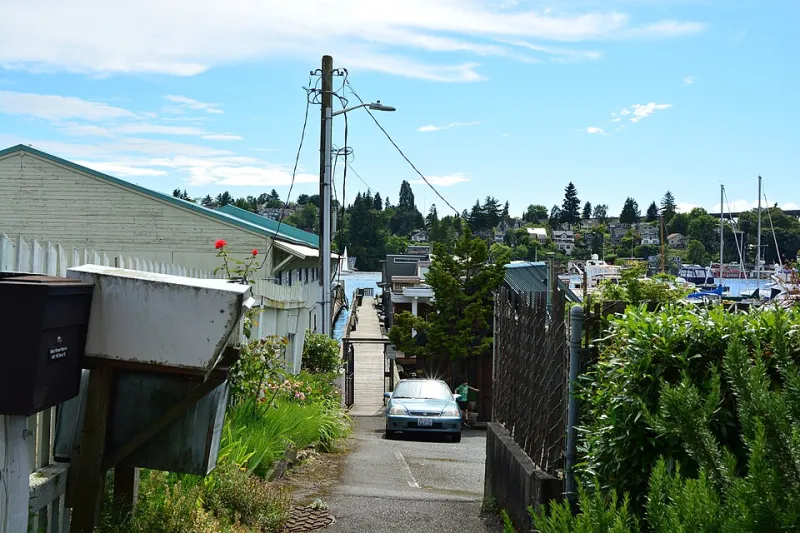
Photo: Andre Carrotflower, CC BY-SA 4.0, via Wikimedia Commons
Every waterfront buyer has a moment where the view does the talking. You walk through the front door, the harbor opens up beyond the living room windows, and suddenly you're mentally furnishing the place before you've checked whether the windows even open.
We get it. We've had that moment too. But the owners we talk to around the harbor — the ones genuinely happy five years in — all say some version of the same thing: I'm glad I looked past the view. The ones with regrets? They bought the view and moved into a list of annoyances.
So we put together a simple framework. Call it the Harbor House Quotient: ten questions, each scored 1 to 5, that turn a swoony showing into an honest assessment. Fifty points is a home that fits your life. Anything under 35 means the view is doing most of the heavy lifting.
1. What does the channel sound like at 6 a.m.?
Working boats don't keep banker's hours. If the property faces an active channel, lobster boats, crabbers, and the occasional tour vessel will be idling outside your bedroom window before your coffee finishes brewing. Some buyers love it — that diesel rumble is a lullaby once you're used to it. Others never adjust.
Visit early if you can. Stand in the primary bedroom with the windows closed, then open. Score it honestly.
2. Where does the morning light land?
East-facing water means sunrise over the harbor and blazing afternoons on a deck nobody can sit on. West-facing flips that equation. Neither is wrong, but one of them matches how you actually live. Morning people and sunset-deck people should not be buying the same house.
3. How many steps from kitchen to dock?
If you plan to use the water — fishing, a kayak, a run to the sandbar — count the steps, the gates, and the grade of the path. A gorgeous dock 40 feet downhill through a neighbor's easement is a very different life from one off the back porch. Gear you can't easily reach is gear that stays in the garage.
4. Is there real storage for the stuff?
Waterfront living comes with an inventory problem: life jackets, crab pots, rods, fenders, paddleboards, wet towels, the good cooler and the bad cooler. Look for a garage that fits a boat trailer, a mudroom that can handle sandy feet, and outdoor storage that doesn't rot in the salt air. Closets designed for a subdivision house will not cut it.
5. How exposed is the wind?
A house on an open point gets the postcard and the gale. Walk the lot on a breezy day and notice what rattles. Ask about storm shutters, breakwalls, and which outdoor furniture the neighbors have to bungee down. Wind exposure shapes everything from your heating bill to whether you'll ever actually grill outside.
6. What happens at high tide?
This is the question sellers hope you skip. Check the tide tables and come back during a king tide if you're serious. Does water pool in the yard? Does the road out front flood? Does the crawl space smell like a bait bucket? A home that's charming at low tide and an island at high tide is a home with a story you should hear before closing.
7. Who's around in July — and who's around in January?
Some harbor streets go quiet and lovely off-season. Others go desolate, with shuttered restaurants and a fifteen-minute drive to a decent grocery store. If you're buying a full-time home, spend a shoulder-season weekend in town. If it's a summer place, visit in the rain in February anyway. You'll learn more in two days than in ten summer visits.
8. Can the house handle a nor'easter (or a hurricane, depending on your coast)?
Look up. Pilings beat piers. Look down. Elevated utilities beat ones in the flood zone. Ask for the elevation certificate, check the FEMA flood map, and get real insurance quotes before you fall in love — not after. A beautiful house with a $9,000 annual flood premium is a very different purchase than it looks on a sunny Saturday.
9. What does the neighbor's dock situation look like?
Waterfront lots share water. A next-door party dock, a busy public boat ramp, or a charter operation running clients out at dawn will all become part of your daily soundtrack. Scan the shoreline in both directions and ask direct questions: who uses the neighboring docks, and how often?
10. Would you still want it on a gray Tuesday in November?
This is the gut check that ties the scorecard together. Strip away the blue-sky showing, the fresh flowers on the counter, the agent's enthusiasm. Picture the house in rain gear and rubber boots, doing the ordinary work of ordinary life. If the answer is still yes — or at least mostly — you've found something real.
Print it, bring it, use it
Score each question 1 to 5 during or right after the showing, while impressions are fresh. The total matters less than the pattern: a home that scores well across the board is a genuine candidate, while one that aces three questions and fails the rest is telling you exactly where the friction will live.
The harbor isn't going anywhere. Neither is the next listing. But the right house on the right stretch of water — the one that works on gray Tuesdays and holiday weekends alike — is worth finding the unglamorous way.